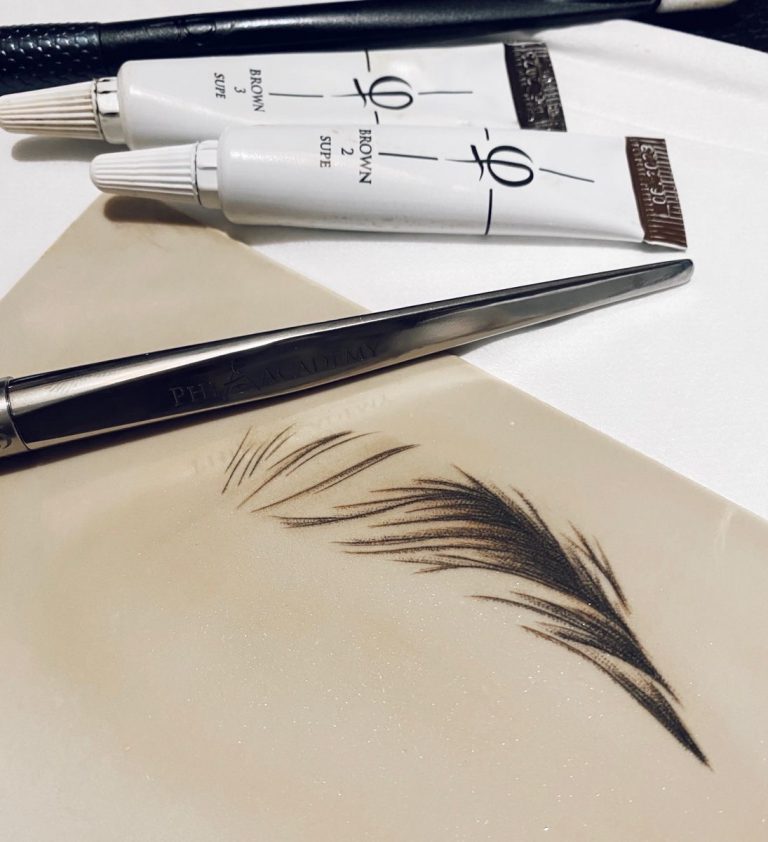
Microblading is a manual eyebrow pigmentation method in which eyebrow hair strokes are drawn into the skin using a hand tool with a row of fine blades.
The goal is to create natural and full eyebrows that complement the facial features. This technique allows for very detailed and fine hair-like strokes.
The so-called hair-stroke technique gently corrects the eyebrow shape and can reconstruct an absent eyebrow. The treatment requires careful aftercare to ensure that the drawn strokes retain sufficient pigment.
The results typically last between 1 and 3 years. However, the treatment requires careful aftercare to ensure that the strokes hold well and achieve sufficient pigment retention.
High-quality pigments from PhiAcademy are used. These pigments meet the highest standards and are free from iron oxides, nickel, heavy metals, and animal testing, ensuring that unexpected color changes are excluded.
The healing time can vary depending on the individual and their personal healing rate. In general, the healing process takes about 4–6 weeks. In the first few days after the treatment, you may need to apply an ointment and ensure that the treated area is kept clean and dry. Within 1–2 weeks, you should notice the formation of scabs in the treated areas. However, these scabs must not be picked or removed, as this can lead to infection and slow down the healing process. After approximately 4–6 weeks, the treated area should be fully healed. It is important to follow the aftercare instructions to ensure a quick and complete healing process and to achieve the best possible results.
Length of the procedure
In general, the first PMU session takes between 2 and 3 hours. The touch-up treatment is usually quicker.
Pain sensitivity
Pain perception varies from person to person, as everyone has a different pain sensitivity.
IMPORTANT
If you are diabetic, have a bleeding disorder, are infected with HIV or hepatitis, or have consumed alcohol or drugs within 24 hours prior to the treatment, we unfortunately have to refuse the treatment.